
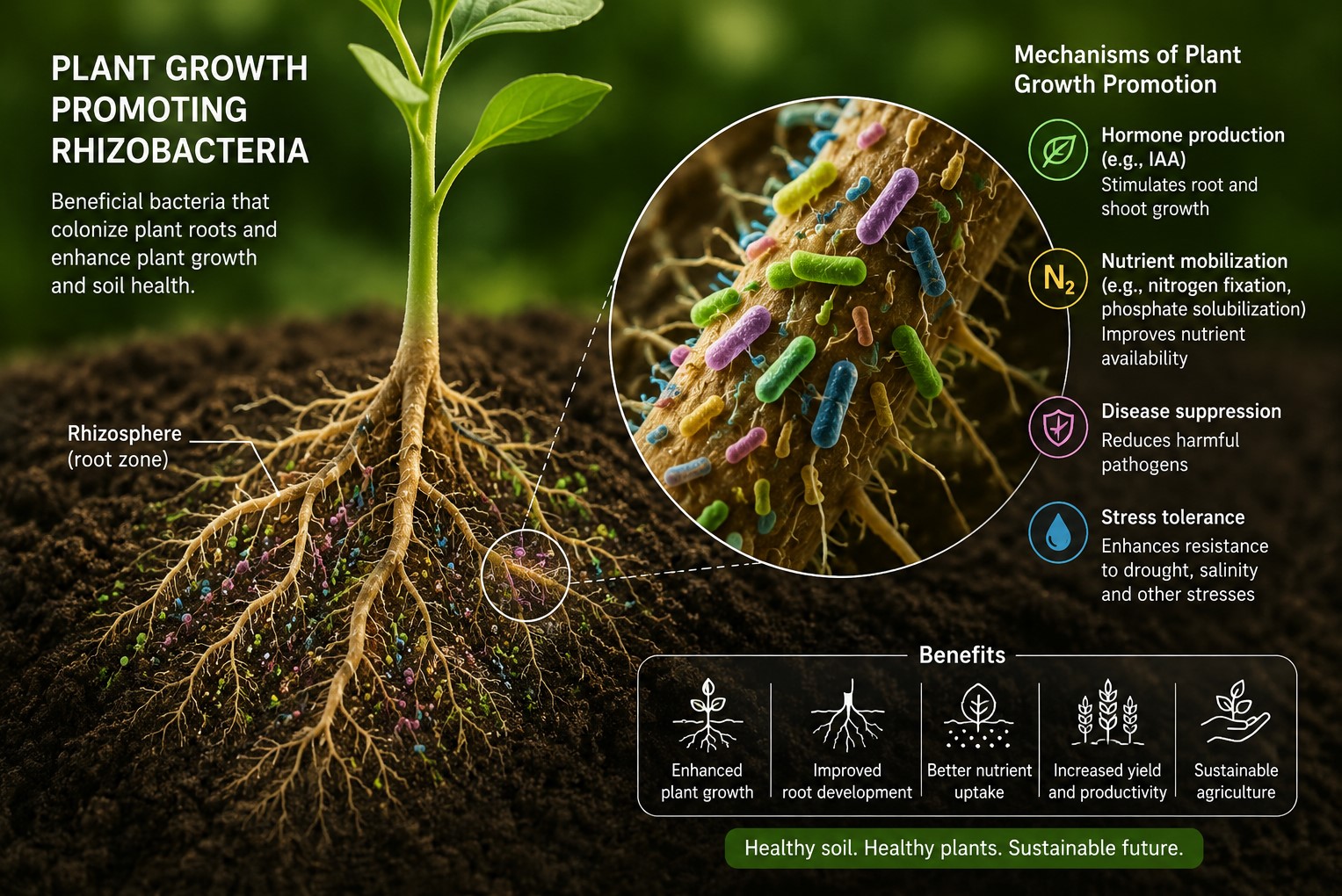
Certain soil bacteria are capable of pulling nitrogen from the air and converting it into a form plants can use. No synthetic inputs, no energy-intensive industrial process — just biology.
These bacteria are called Plant Growth Promoting Rhizobacteria, or PGPR. They live in and around plant roots, and nitrogen fixation is only part of what they do. Several key species also solubilize phosphorus — unlocking nutrient reserves already present in your soil that plants simply cannot access in their current form. Phosphorus fertilizer is expensive. The phosphorus locked in your soil is free, if the right biology is present to release it.
The most studied genera include Azospirillum, Azotobacter, Burkholderia, Herbaspirillum, Pseudomonas, and Bacillus. Beyond nutrient fixation and solubilization, several of these also suppress soil-borne pathogens and produce plant growth hormones that stimulate root development independently of any nutrient benefit.
What can a farmer realistically expect? The honest answer, based on the available field research, is a 5–20% yield increase at current fertilization rates, or the ability to reduce nitrogen inputs by up to 20% while maintaining yield. Higher responses have been recorded, but under specific conditions — low-fertility soils, high soil organic carbon, minimal synthetic nitrogen inputs.
That last point matters: high synthetic nitrogen inputs suppress PGPR activity. The bacteria stop fixing nitrogen when it is already abundant in the soil.
PGPR perform best alongside the same practices that support soil health generally.
For a full scientific treatment of this topic, including a practical on-farm trial design for testing PGPR inoculants in your own conditions, see our published paper in the Research – Own Research section.
You can download the paper directly in PDF here:111-I_Rashev_G_Dimitrov_paper-2025 — treeexplorer.top
And find it on the journal’s website here: Management and Sustainable Development, 2/2025