
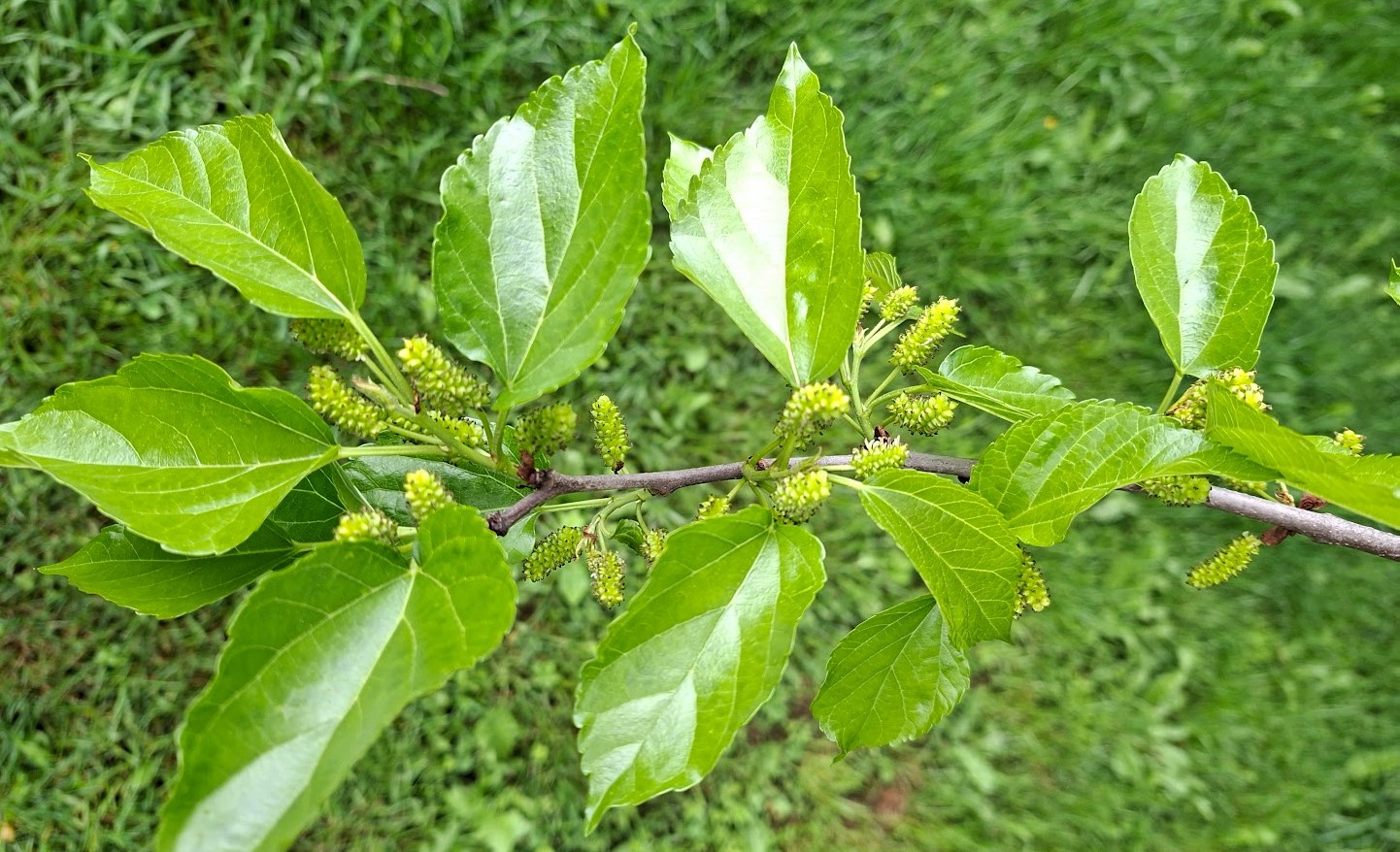
The mulberry tree is perhaps best known on this site for what it does for animals — high-quality summer fodder, superior digestibility, and a nutritional profile that holds its own against alfalfa. But there is another dimension to this plant that deserves equal attention: its value for human nutrition and health.
The mulberry tree is not one thing. Leaves, fruit, bark, and roots each have their own chemistry, their own traditional uses, and their own research. This article is about the leaves — the part farmers actually have in abundance. Where the fruit has stronger or relevant evidence, that is clearly stated.
Mulberry Leaves as a Vegetable
Fresh mulberry leaf is an established food crop in several East Asian countries. In China, South Korea, Japan, and Turkey, the young growing tip of the mulberry branch — the apical bud and the first two leaves — is harvested and eaten as a vegetable.
“Fresh mulberry leaf vegetable is nutritive and becoming popular. Mulberry leaf vegetable (Morus alba L.), consisting of a bud and two leaves at the top of the mulberry branch, are popular in some countries such as China, Turkey, Japan, and South Korea. Modern pharmacological experiments have confirmed that mulberry leaves have multifunctional properties, such as anti-obesity, antibacterial, antioxidant, and antidiabetic. There are various kinds of products on the market, such as, semi-dry, quick-frozen, and fresh mulberry leaf vegetable. Compared with processed products, fresh mulberry leaf vegetable is more popular because of its fresh sweet taste.” [1]
The nutritional profile of young mulberry leaves supports their use as a vegetable. They contain 20–23% crude protein, 8–10% total sugars, and 12–18% minerals on a dry matter basis [2]. These are high figures for a leafy green — comparable in protein to legumes, and richer in minerals than most conventional salad crops.
Mulberry leaves have also been used for centuries in East Asian traditional medicine — in China specifically for the management of hypertension, hyperglycaemia, inflammation, fever, and coughing. Herbal tea prepared from young mulberry shoots is a widely consumed health beverage across the region [4].
What Makes Mulberry Leaves Bioactive
Understanding what is in mulberry leaves helps explain why the health effects described in the research occur. The three most important functional compound groups are:
1-Deoxynojirimycin (DNJ): A naturally occurring alkaloid found almost exclusively in mulberry leaves. DNJ is a potent inhibitor of alpha-glucosidase — the enzyme responsible for breaking down complex carbohydrates into glucose in the digestive tract. By slowing this process, DNJ reduces the rate at which glucose enters the bloodstream after a meal. This is the primary mechanism behind the blood sugar effects observed in clinical leaf studies [4].
Phenolics and flavonoids: Including rutin, quercetin, chlorogenic acid, and numerous others. These compounds drive the antioxidant and anti-inflammatory properties of the leaf. They are present in both the leaves and the fruit, though in differing profiles and concentrations [4].
Chlorophyll and carotenoids: Present in significant quantities in fresh and lightly processed leaves, contributing to antioxidant capacity.
It is worth noting that DNJ is specific to the leaves — it is not found in meaningful quantities in the fruit. This is why the mechanism of blood sugar action differs between leaf and fruit, and why the evidence from fruit studies cannot be assumed to apply directly to leaves or vice versa.
Health Effects of Mulberry Leaves
The most comprehensive scientific review dedicated specifically to mulberry leaves and human health comes from Thaipitakwong and colleagues (2018), published in the journal Pharmaceutical Biology. Their work compiled and summarized chemical composition, biological properties, and clinical evidence across two decades of published research, searching specifically for studies on mulberry leaves in relation to cardiometabolic risk factors.
Their findings on leaf-specific effects, drawn from both preclinical and human clinical studies, cover the following areas:
Blood Sugar Regulation
This is where the evidence for mulberry leaves is most consistent and mechanistically well understood. The key compound is DNJ, which inhibits the enzyme alpha-glucosidase in the small intestine, slowing the conversion and absorption of dietary carbohydrates. The result is a lower and slower post-meal blood glucose spike — the same mechanism targeted by the pharmaceutical drug acarbose.
“Preclinical and clinical studies showed that mulberry leaves possessed various beneficial effects against cardiometabolic risks, including antihyperglycaemic, antihyperlipidaemic, antiobesity, antihypertensive, antioxidative, anti-inflammatory, anti-atherosclerotic and cardioprotective effects. 1-Deoxynojirimycin (DNJ), phenolics and flavonoids are the prominent functional compounds.” [4]
Human clinical research from the same research group demonstrated that mulberry leaf powder standardised to 12 mg of DNJ improved postprandial hyperglycaemia, fasting plasma glucose, and glycated haemoglobin (HbA1c) — the same long-term blood sugar marker that is used to diagnose and monitor type 2 diabetes. This finding is directly relevant for individuals in the pre-diabetic or early diabetic range.
Lipid Profile and Cholesterol
Clinical and preclinical studies reviewed by Thaipitakwong et al. showed antihyperlipidaemic effects — meaning mulberry leaf consumption was associated with improvements in blood fat levels. The review identified both total cholesterol reduction and HDL-C improvement across the included studies, consistent with the direction of effects later found in the mulberry fruit meta-analysis.
Hypertension
Hypertensive effects were identified in the leaf-specific review — a finding less commonly discussed, and one that is supported by the long traditional use of mulberry leaf tea for blood pressure management in East Asia [4].
Antioxidant and Anti-inflammatory Effects
Mulberry leaves showed antioxidative and anti-inflammatory effects in both laboratory and clinical settings. The flavonoid and phenolic content of the leaves drives these effects. Oxidative stress and chronic low-grade inflammation are recognized drivers of cardiovascular disease and metabolic deterioration, so these findings are not incidental.
Anti-obesity Effects
The alpha-glucosidase inhibition that reduces post-meal glucose spikes also reduces the total energy extracted from carbohydrate-rich meals. Combined with evidence of direct effects on adipose tissue metabolism in preclinical studies, mulberry leaf research has documented anti-obesity effects. However, the human clinical evidence on body weight specifically is less thoroughly established than the blood sugar evidence.
The overall picture from the leaf-specific evidence base is promising. The mechanisms are well characterized, the traditional use is extensive, and clinical studies support the most important effects — particularly around blood sugar regulation. The honest caveat, noted by Thaipitakwong et al., is that inconsistent concentrations of bioactive compounds (especially DNJ) across different mulberry varieties, growing conditions, and processing methods make standardization difficult. This matters for anyone relying on home-grown or unprocessed mulberry leaves rather than standardized commercial extracts.
Mulberry Fruit — A Separate but Related Evidence Base
The strongest quantified clinical evidence in terms of effect size and statistical rigour comes not from leaves but from the mulberry fruit — and it is worth presenting clearly, while keeping the distinction explicit.
A 2022 systematic review and meta-analysis by Xibin Chen and colleagues, published in the Journal of Clinical Pharmacy and Therapeutics, pooled data from multiple randomized controlled trials (RCTs) on mulberry consumption — primarily covering mulberry fruit and fruit-derived products. The conclusion:
“According to the available evidence, mulberry consumption can provide favourable effects on HbA1C, some lipid profile parameters, and certain inflammatory markers compared to the control group. It seems that mulberry consumption is an appropriate strategy to reduce the risk of cardiometabolic diseases. However, further research is recommended to shed light on these findings.” [3]
The specific findings from mulberry fruit consumption are summarized in Table 1 below.
Table 1. Clinical effects of mulberry fruit consumption — summary of meta-analysis data [3]
| Health Parameter | Effect Observed | Statistical Significance | Notes |
| HbA1c (long-term blood sugar) | Significant reduction (WMD: −0.55) | p = 0.044 | Key diabetes monitoring marker |
| Total cholesterol | Significant reduction | Pooled RCT data | Favorable lipid effect |
| HDL-C (‘good cholesterol’) | Significant increase | >300 mg/day dose | Dose-dependent |
| CRP (inflammatory marker) | Significant reduction (WMD: −1.60 mg/L) | p = 0.034 | Three RCTs consistent |
| Fasting glucose | Trend toward reduction | Not significant (p = 0.224) | Further research needed |
| Insulin | No significant effect | p = 0.854 | Consistent across studies |
Two things are worth stating clearly here. First, the HbA1c reduction of 0.55% observed in the fruit meta-analysis is clinically meaningful. Dietary interventions that consistently achieve this magnitude of HbA1c reduction are generally considered worth pursuing. Second, the direction of effects across cholesterol, HDL, and CRP aligns with the leaf evidence — which is what you would expect given that both parts of the plant share significant flavonoid and phenolic chemistry, even if the specific compounds and concentrations differ.
The fruit and the leaf are not the same. But they come from the same plant, share overlapping bioactive chemistry, and point in the same direction.
Table 2. Mulberry leaves vs. mulberry fruit — key distinctions for health use
| Mulberry Leaves | Mulberry Fruit | |
| Primary bioactive compounds | 1-Deoxynojirimycin (DNJ), flavonoids, phenolics, chlorogenic acid | Anthocyanins, resveratrol, quercetin, rutin |
| Key mechanism (blood sugar) | Alpha-glucosidase inhibition — slows carbohydrate digestion | Improves insulin sensitivity and glucose metabolism |
| Evidence type | Preclinical + clinical studies; comprehensive review [4] | RCT meta-analysis [3] |
| Practical form | Fresh vegetable, tea, leaf powder, extract capsules | Fresh fruit, juice, jam, dried fruit, anthocyanin extracts |
| Traditional use | Blood sugar, hypertension, inflammation — centuries of use in East Asia | Antioxidant, general health, culinary |
Mulberry Leaves in the Kitchen
The practical applications of mulberry leaves as a food are broader than they might initially appear.
As a Fresh Vegetable
Young mulberry leaves — particularly the terminal bud and first two leaves of a shoot — are mild, slightly sweet, and versatile. They can be eaten raw in salads, lightly blanched, stir-fried, or used as a wrapping leaf alongside cooked meat (a common use in South Korea). No preparation beyond washing is needed for fresh consumption.
Mulberry Leaf Tea
Dried mulberry leaf tea has the longest documented history of human use and is commercially available across Europe and Asia. It is the most accessible entry point for anyone wanting to incorporate mulberry leaves into their diet without growing their own. Given the clinical evidence on blood sugar management via the DNJ mechanism, mulberry leaf tea is a practical and low-cost option particularly relevant for individuals managing blood sugar.
Mulberry Leaf Flour
Perhaps the most interesting practical application from a food systems perspective is the integration of mulberry leaf powder into flour-based foods. Research from India examined this approach directly:
“This paper deals with development of mulberry leaf powder and its use with wheat flour to develop paratha, the most common food item of breakfast and dinner in the Indian diet. The optimum ratio of the mulberry leaf powder and wheat flour (MLP-WF) mix for preparation of paratha on the basis of sensory quality was found to be 1:4.” [2]
A 1:4 replacement — 20% of the flour by mulberry leaf powder — significantly enriches the final product with protein, minerals, and DNJ without unacceptably altering its taste or texture. The same principle applies equally to bread, pasta, or any other flour-based staple.
Table 3. Practical forms of mulberry leaf for human consumption
| Product Form | Characteristics | Practical Use |
| Fresh leaf vegetable | Young bud + top two leaves; mild, slightly sweet taste; most popular form in Asia | Direct consumption as a leafy green, salads, blanched, stir-fried, or as a wrapping leaf alongside grilled meat |
| Semi-dry / quick-frozen | Extends shelf life while retaining nutritional properties | Retail product; off-season availability |
| Mulberry leaf powder (MLP) | Dried and milled; concentrates protein, minerals, and DNJ content | Blended with wheat flour for bread and flatbreads — optimum ratio 1:4 (MLP:wheat flour) [6] |
| Mulberry leaf tea | Dried leaf infusion; commercially available; long history in East Asian medicine | Traditional use for blood sugar regulation and general metabolic health; widely available in health food markets |
| Standardized leaf extract (capsules) | Concentrated DNJ; used in clinical studies for blood sugar management | Supplement form; most researched for clinical blood sugar effects [4] |
A Note on the Broader Picture
If you have read my article on mulberry as animal fodder, you will recognise several of the secondary metabolites mentioned here — tannins, flavonoids, polyphenols — that benefit animal health. The same plant chemistry that improves rumen efficiency and milk quality in dairy cattle also appears in the human nutrition evidence. This is not a coincidence. It reflects the fact that mulberry leaves are genuinely bioactive, not simply nutritious.
What to Take Away
The following conclusions can be drawn from the reviewed evidence, stated conservatively:
- Mulberry leaves are safe, nutritious, and edible. They are an established vegetable in multiple Asian countries with a long, well-documented history of safe human consumption.
- The key bioactive compound in the leaves is 1-Deoxynojirimycin (DNJ), which inhibits carbohydrate digestion and has demonstrated blood sugar reduction in human clinical studies. This is specific to the leaves and is not the same mechanism as the fruit.
- A comprehensive review of leaf-specific human and preclinical evidence (Thaipitakwong et al. 2018) documents antihyperglycaemic, antihyperlipidaemic, antiobesity, antihypertensive, antioxidative, and anti-inflammatory effects — with blood sugar management being the most consistently supported.
- A separate meta-analysis of Randomized Controlled Trials on mulberry fruit (Chen et al. 2022) found significant improvements in HbA1c, total cholesterol, HDL-C, and CRP. This evidence is for the fruit, not the leaf, though the overlapping bioactive chemistry means the directional findings are consistent.
- Mulberry leaf powder can replace up to 20% of wheat flour in flatbreads without significant sensory compromise — a practical route to nutritional enrichment of everyday foods.
- The main practical limitation for leaves is variability: DNJ content differs by variety, season, and how the leaves are processed. Commercially standardized extracts give the most predictable results for therapeutic use. Home-grown or unprocessed leaves are nutritious but less predictable in bioactive concentration.
- If you are already growing mulberry trees — for fodder, shade, or as part of an agroforestry system — you are holding a nutritional and medicinal resource that costs you nothing additional to access.
Mulberry is a well-documented, versatile plant with real, measurable benefits — for your animals, for your farm ecosystem, and, as the evidence shows, for you.
Reference List
[1] Teng-da Yang et al., Effects of modified atmosphere packaging on the postharvest quality of mulberry leaf vegetable, 2022, DOI: 10.1038/s41598-022-15257-9
[2] Sarita Srivastava et al., Mulberry (Morus alba) leaves as human food: a new dimension of sericulture, 2003, DOI: 10.1080/09637480310001622288
[3] Xibin Chen MD et al., Impact of mulberry consumption on cardiometabolic risk factors: A systematic review and meta-analysis of randomized-controlled trials [mulberry fruit], 2022, DOI: 10.1111/jcpt.13822
[4] Thanchanit Thaipitakwong et al., Mulberry leaves and their potential effects against cardiometabolic risks: a review of chemical compositions, biological properties and clinical efficacy, 2018, DOI: 10.1080/13880209.2018.1424210